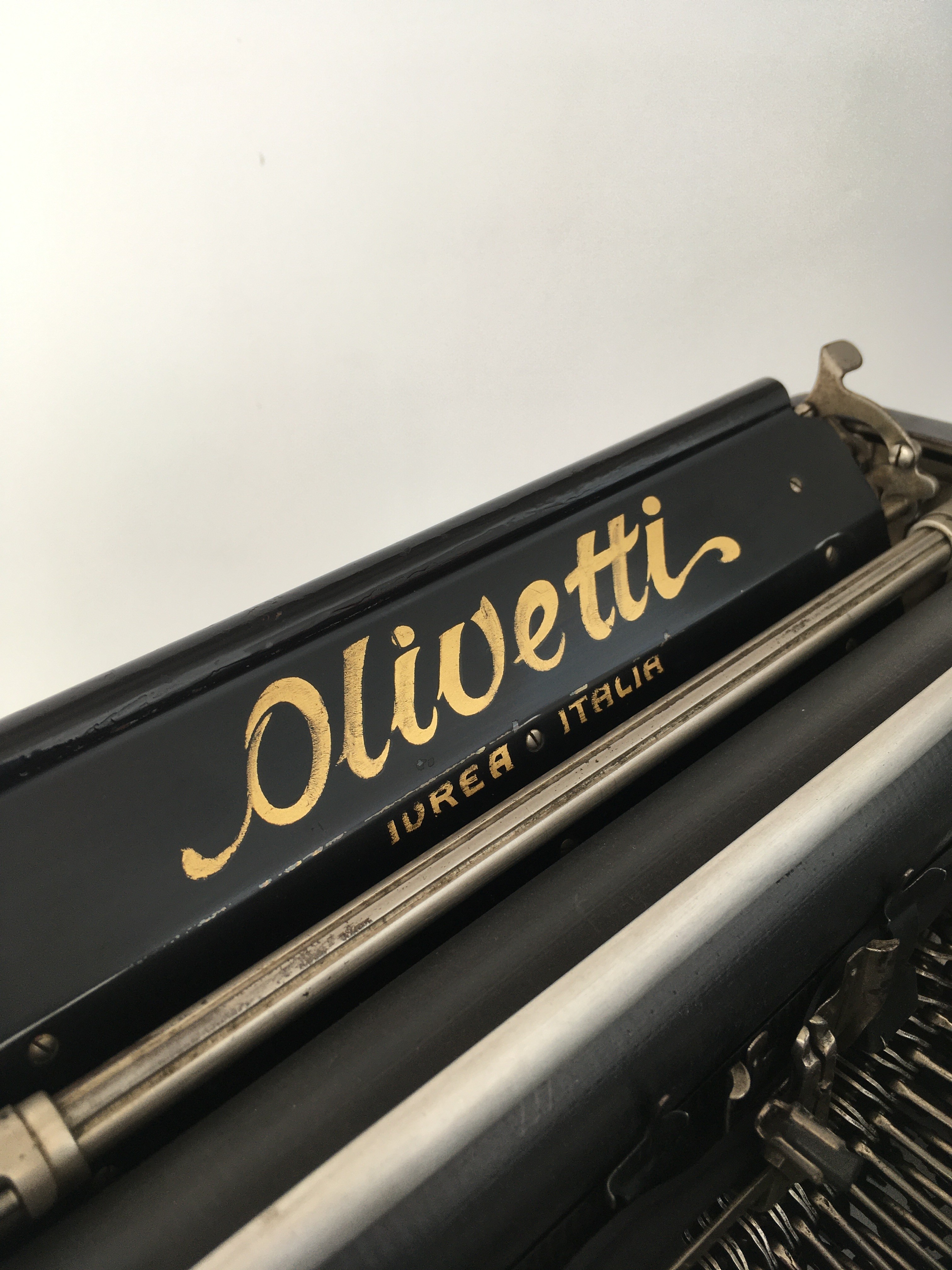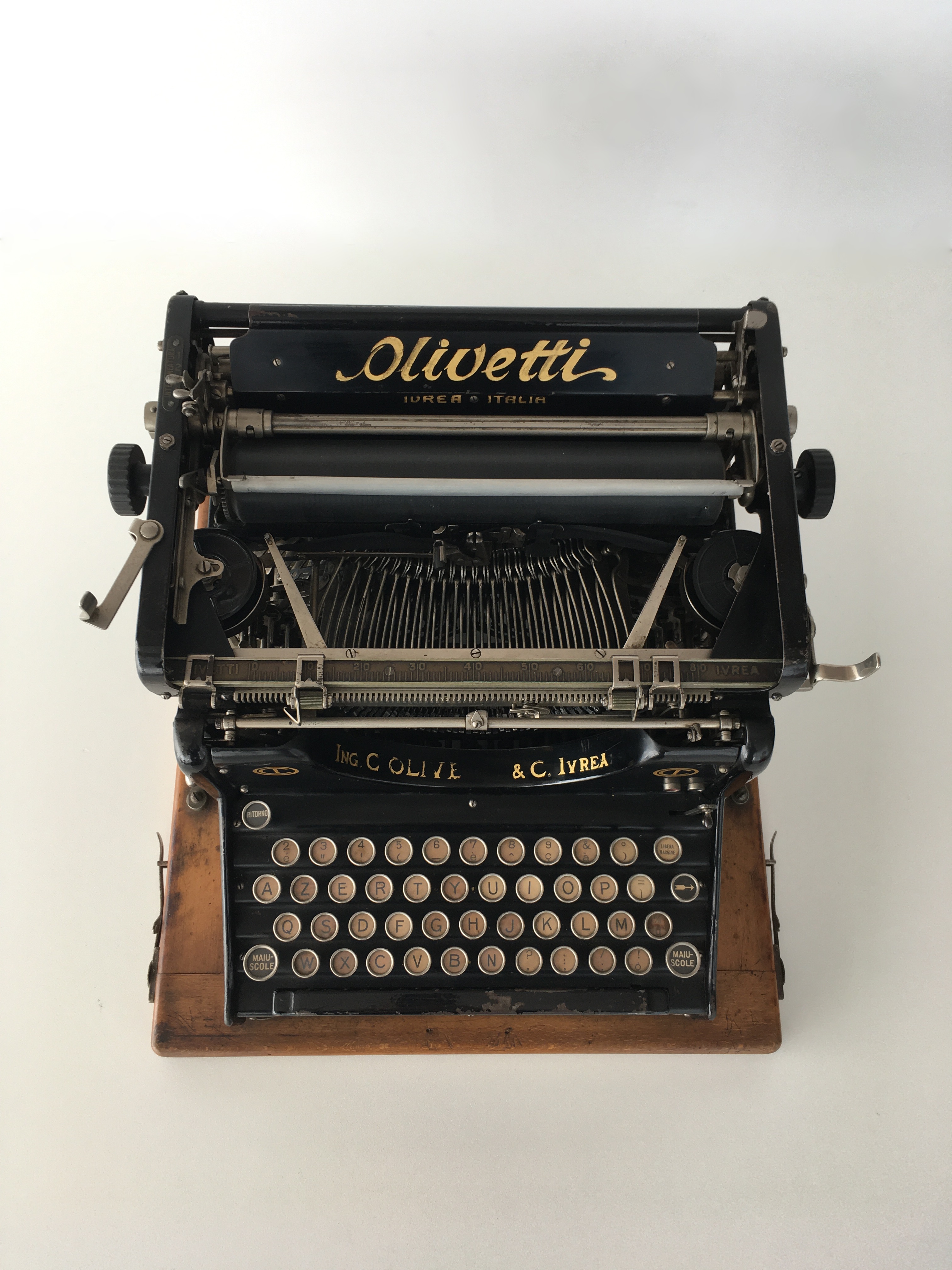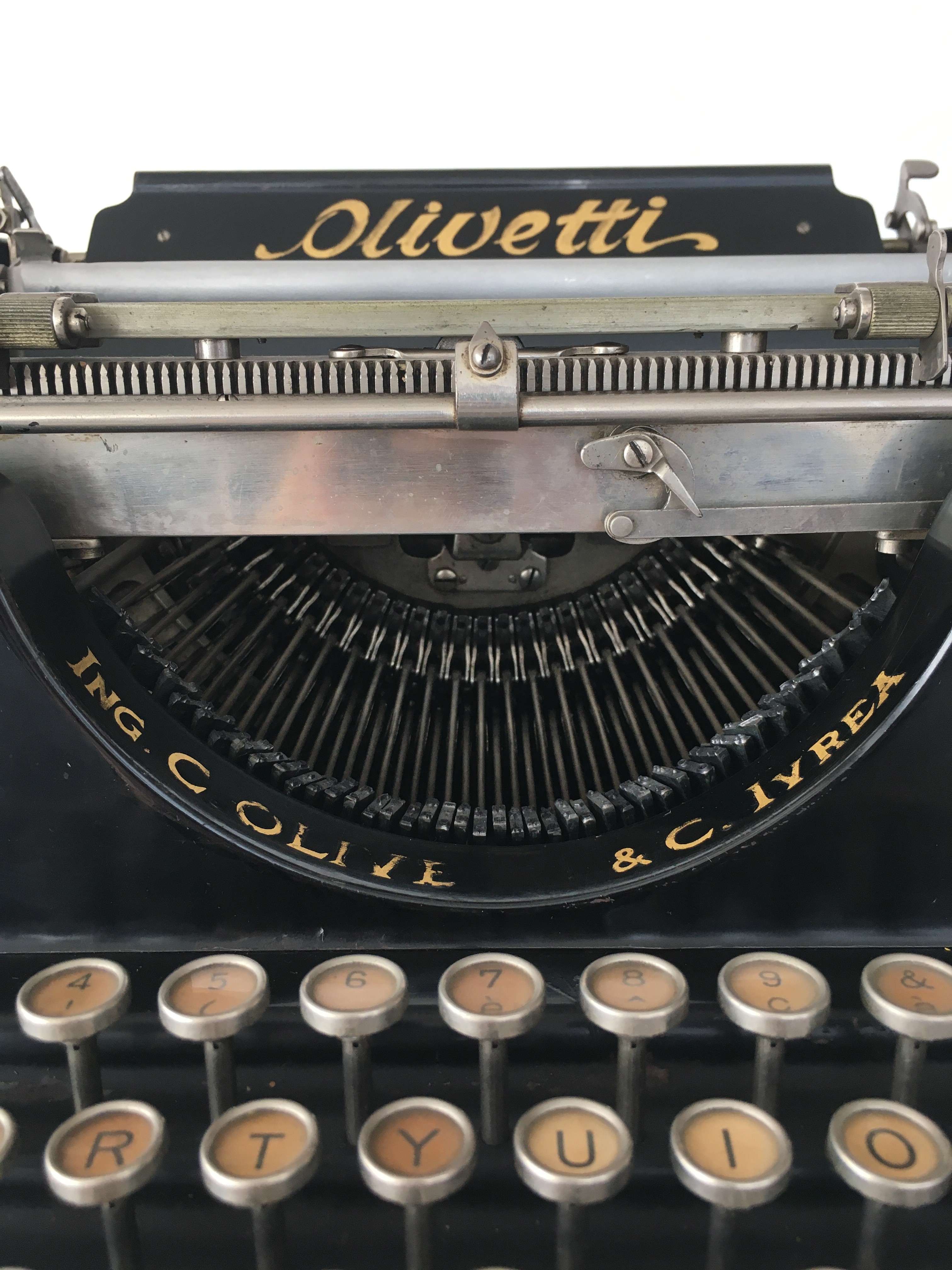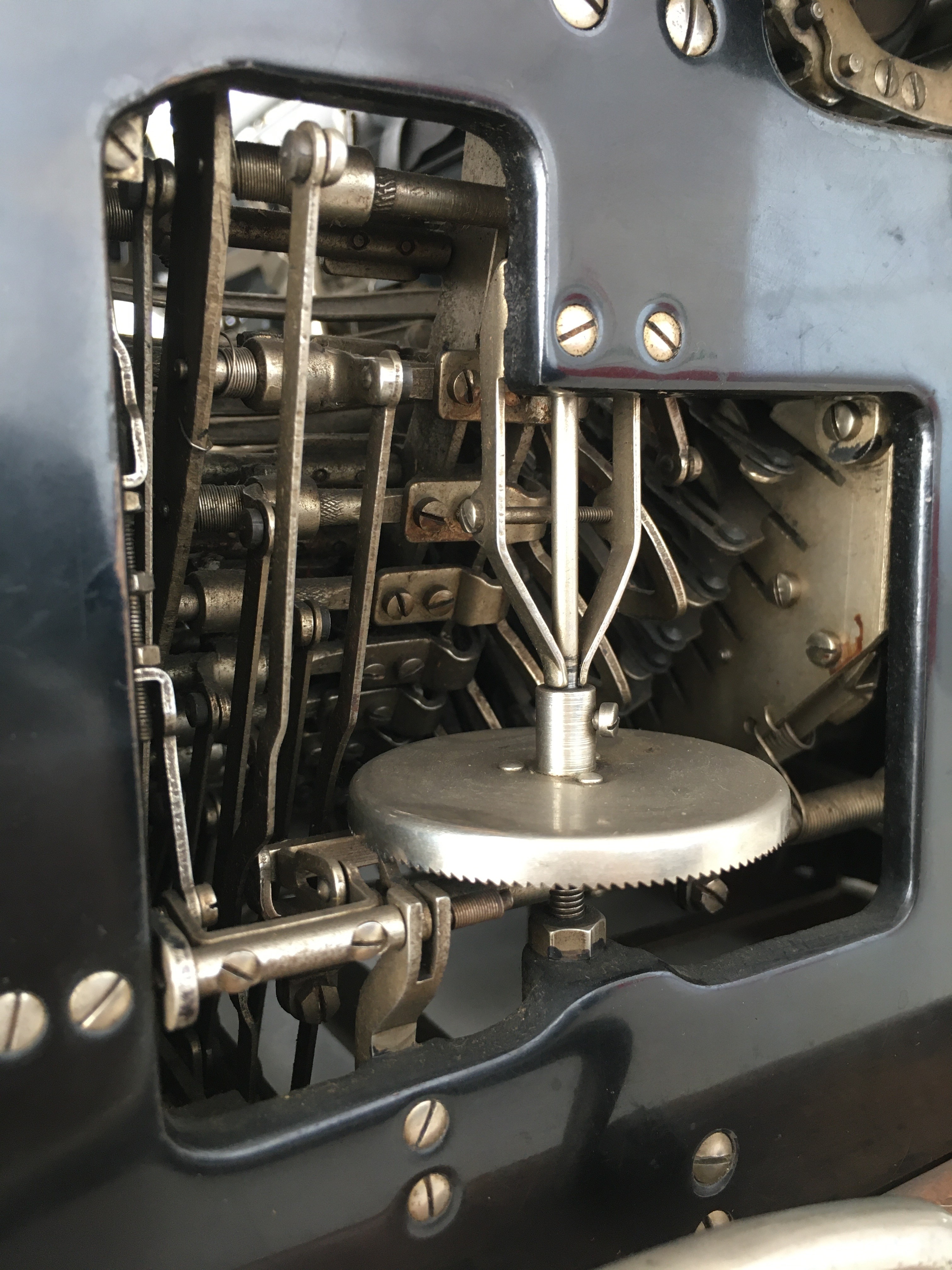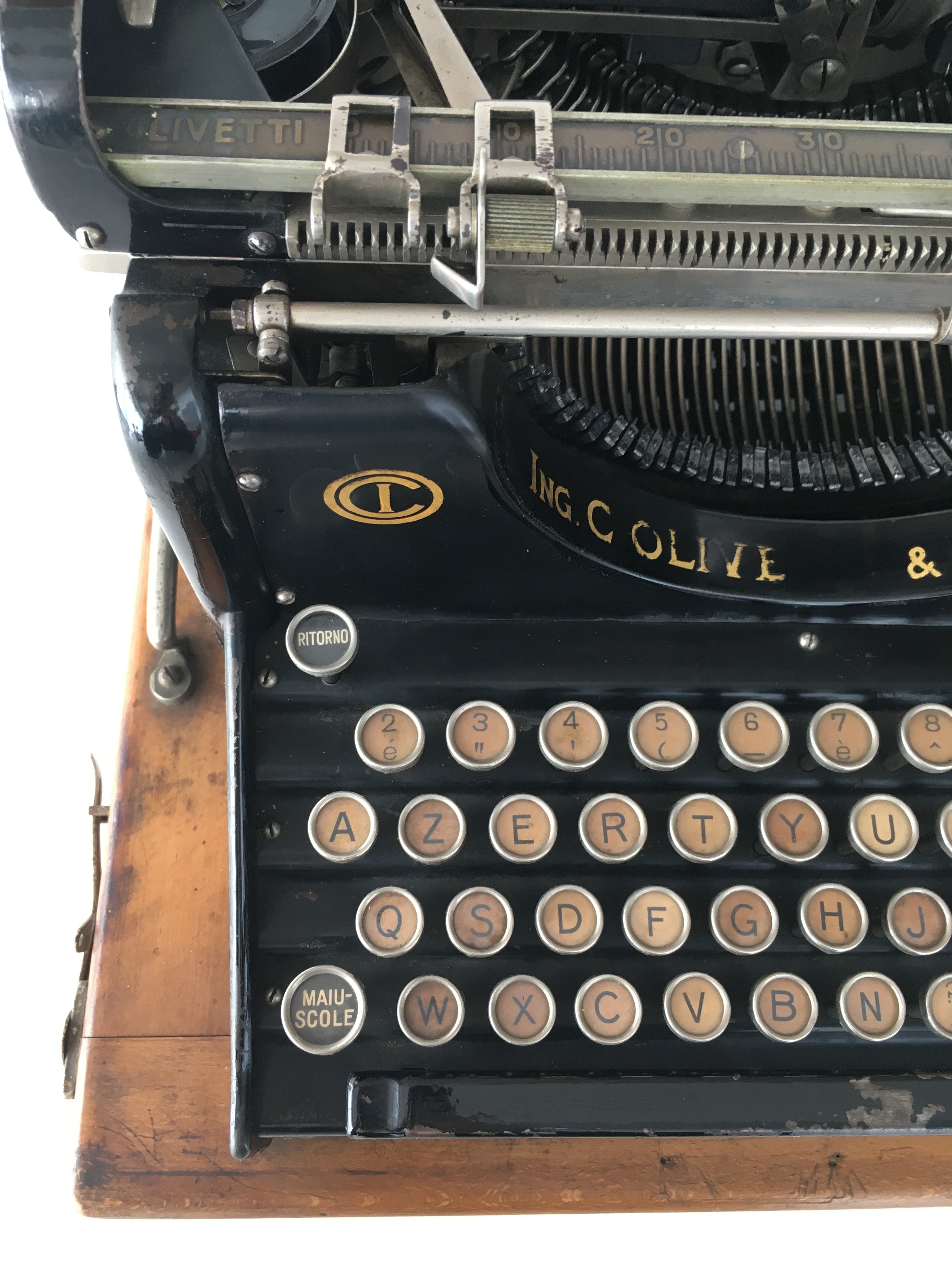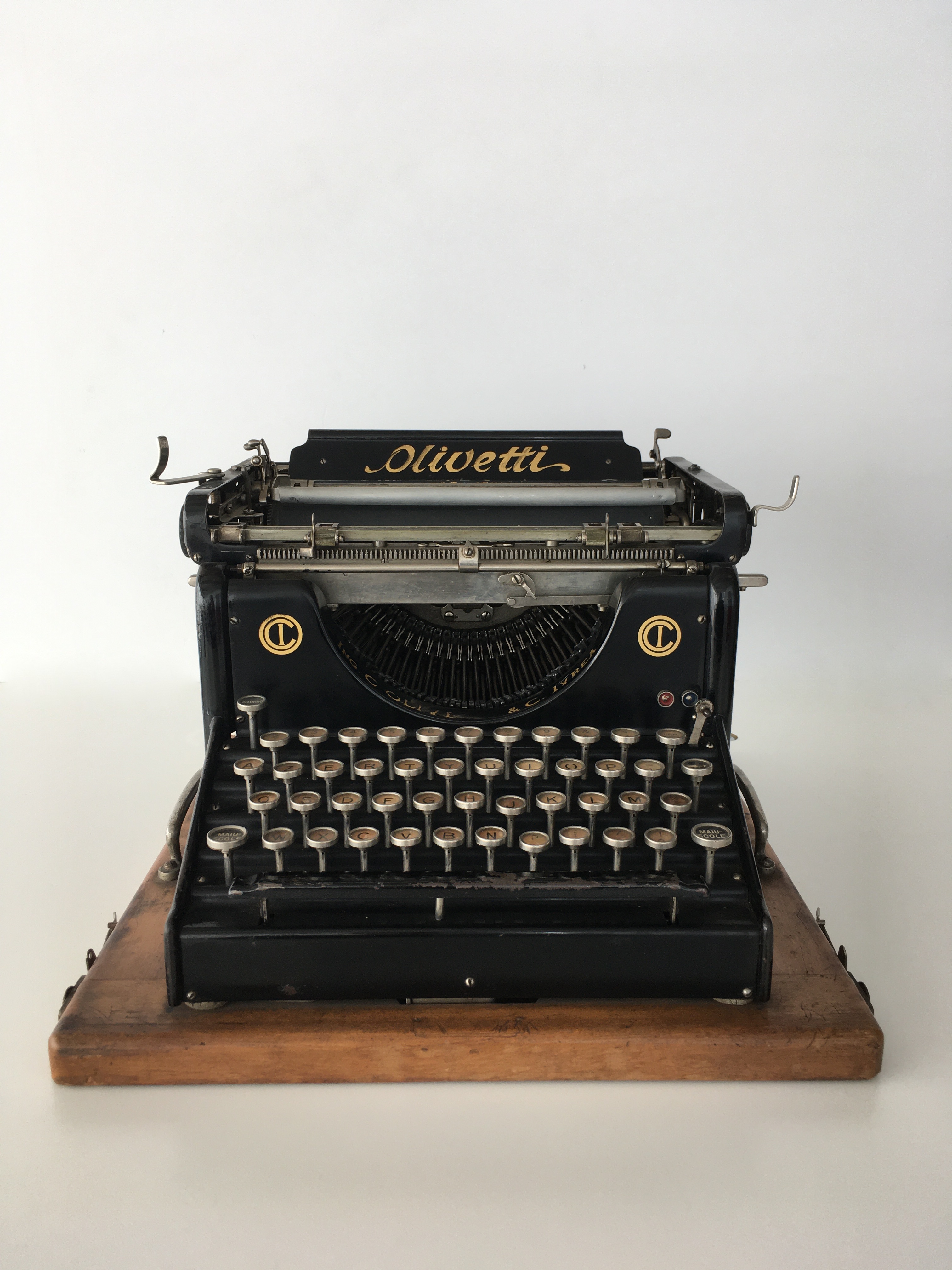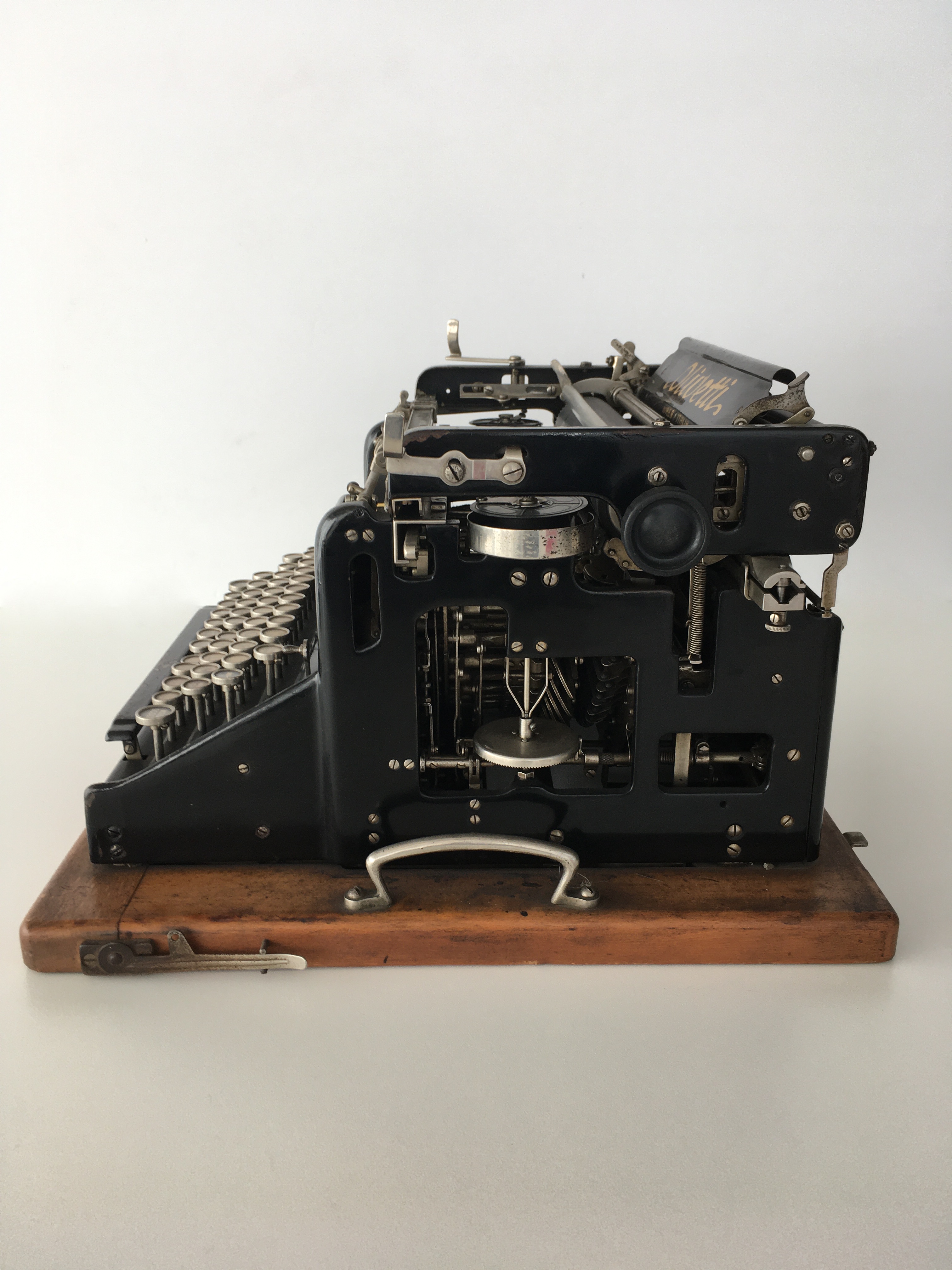
Olivetti, 1911, M1
Olivetti, 1911, M1, Italy
The M1 marks the beginning of Olivetti’s history: it is the first typewriter to be industrially produced in Italy and bears the signature of its founder, Camillo Olivetti. Unveiled to the public at the 1911 International Exhibition in Turin, it achieved immediate success, so much so that in the same year the Ministry of the Navy commissioned one hundred units—the company’s first large-scale order. At first glance, it may resemble the American Underwood models, but the M1 introduced innovative technical solutions and patents that made it unique, establishing its role as the progenitor of all Olivetti production. The project also benefited from Camillo Olivetti’s direct experiences in the United States: between 1893 and 1894, he visited leading laboratories and companies in the sector, including Remington, observing firsthand the evolution of typewriters; in 1908, he returned across the Atlantic to study modern industrial production methods, intending to bring them to Italy.
The M1 is more than just a typewriter: it represents the birth of an industrial vision destined to leave a mark on the history of design, technology, and work culture.
The Debut of the M1 - The Olivetti M1, the first typewriter produced by “Italy’s first national factory,” was initially met with curiosity but struggled to gain a foothold in the market. At a time when typewriters were seen as high-tech products and the most reliable brands came from America or Germany, it was natural that a young Italian company would have difficulty earning the trust of potential clients.
The turning point came in 1912, when Olivetti won a contract to supply 100 typewriters to the Royal Navy, beating Remington. Despite the M1’s price—550 lire, higher than the American competitor’s 450 lire—the typing mechanism designed by Camillo Olivetti, smoother and more responsive, justified the higher cost in the eyes of professionals and public administrations.
The M1’s understated elegance further enhanced its reputation: Camillo Olivetti emphasized that “the machine’s aesthetics were particularly carefully considered. A typewriter should not be a decorative object for the living room, adorned with questionable ornamentation, but should have a serious and elegant appearance at the same time.” The initial success with the Royal Navy, along with deliveries to the Royal House, opened the doors to other public administrations as well as private companies and institutions, gradually consolidating trust in the brand and helping the M1 become a symbol of Italian reliability and quality in the typewriter sector.
Technical Innovations - The M1 introduced several technical solutions that would become hallmarks of Olivetti production in the following years:
-The inked ribbon no longer required manual intervention to reverse: small loops attached to its ends engaged with a lever to automatically activate the reversal mechanism.
-The ribbon color selector was placed at the front of the machine, in a practical and easily accessible position, while the margin adjustment system featured a clever idea: when the set limit was reached, a lever with a small rubber pin would spring forward and block typing, preventing errors.
Produced in about six thousand units between 1911 and 1920, the M1 represents not only an industrial milestone but also a communicative success. Its advertising launch was entrusted to a poster designed by Teodoro Wolf Ferrari, in which the typewriter dominates the foreground under the stern gaze of Dante Alighieri, depicted pointing to it decisively—a powerful image that combines the modernity of technology with the tradition of Italian culture.