Gaumont Stereodrome Metalique

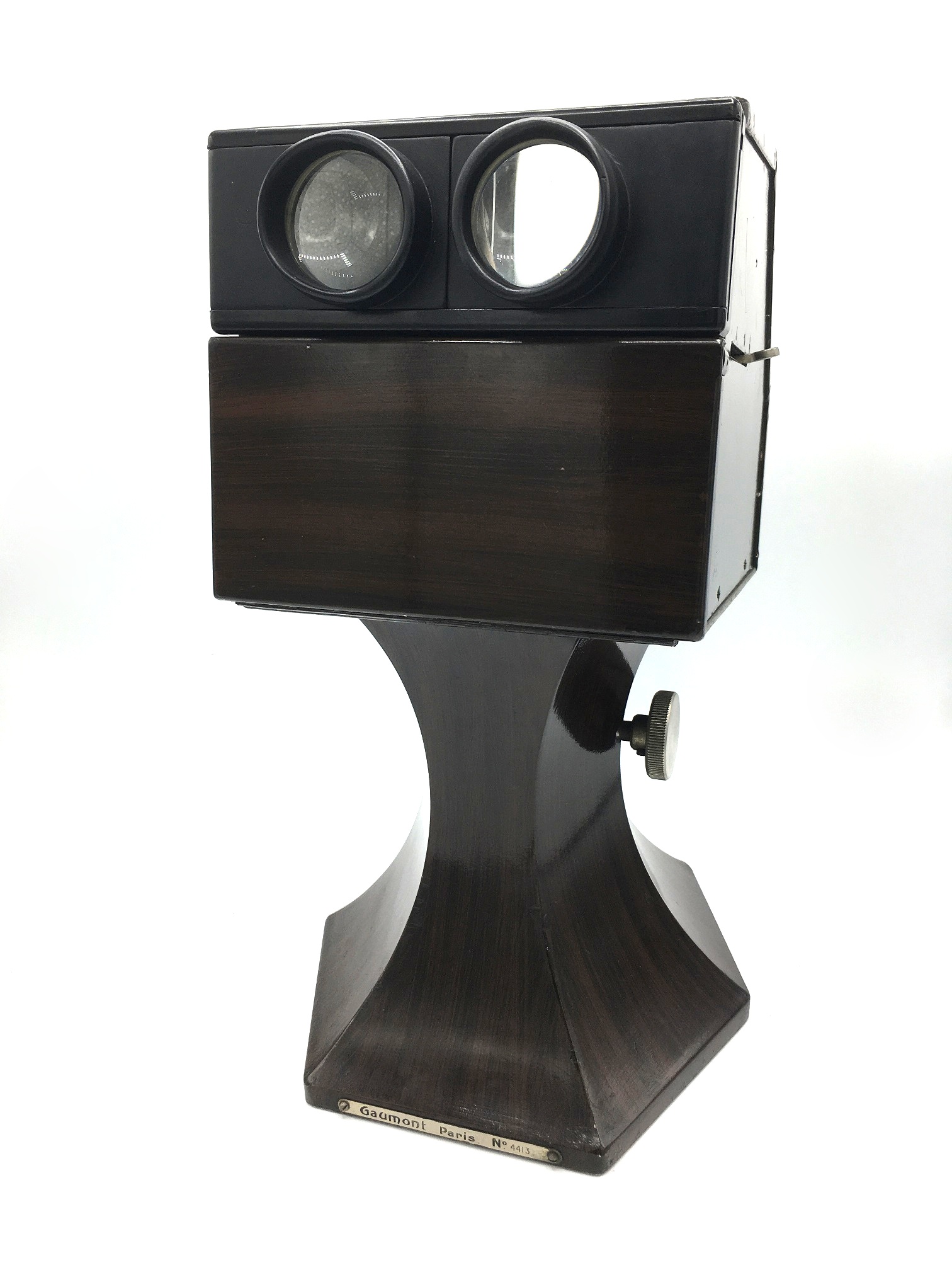
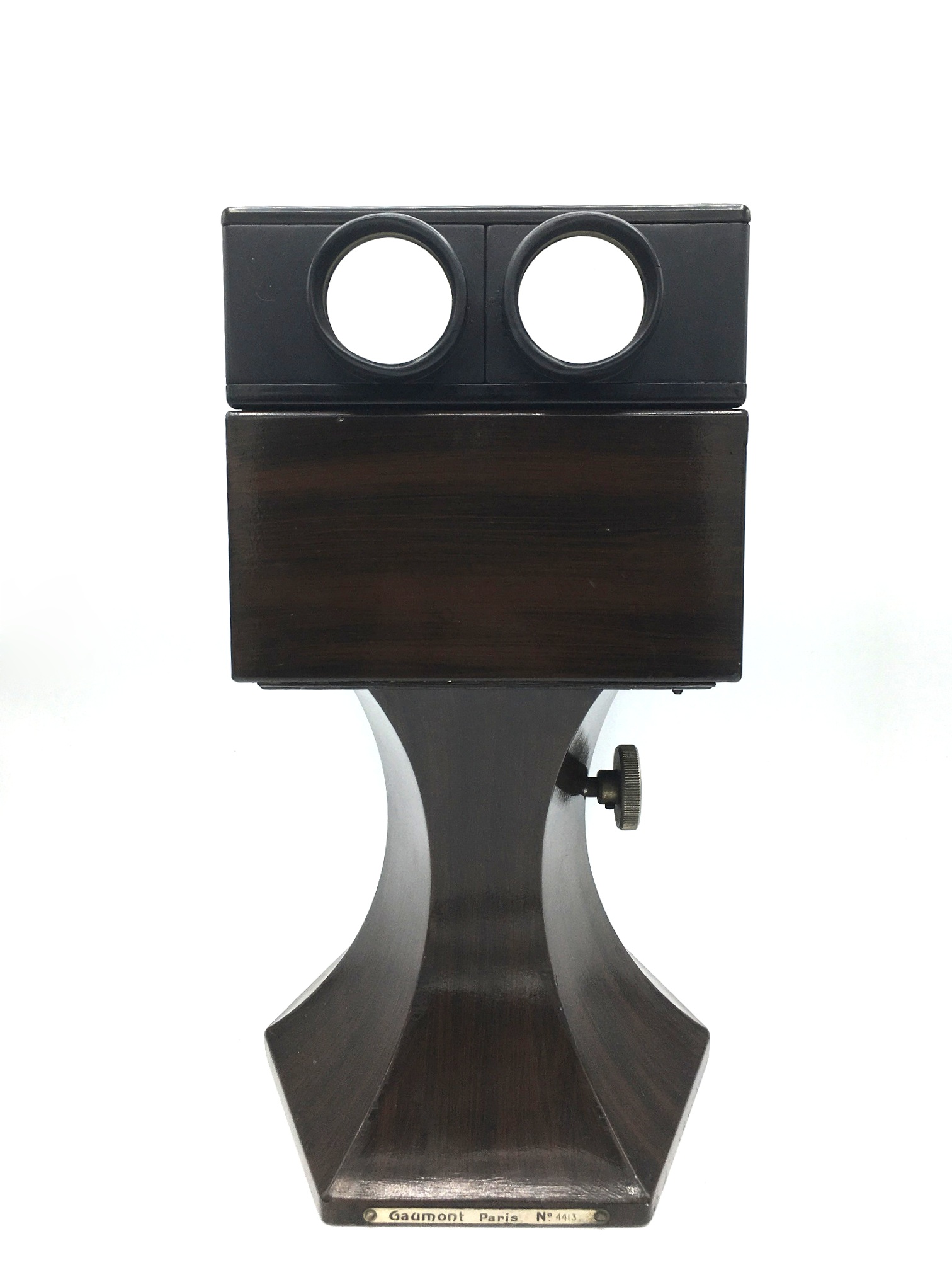
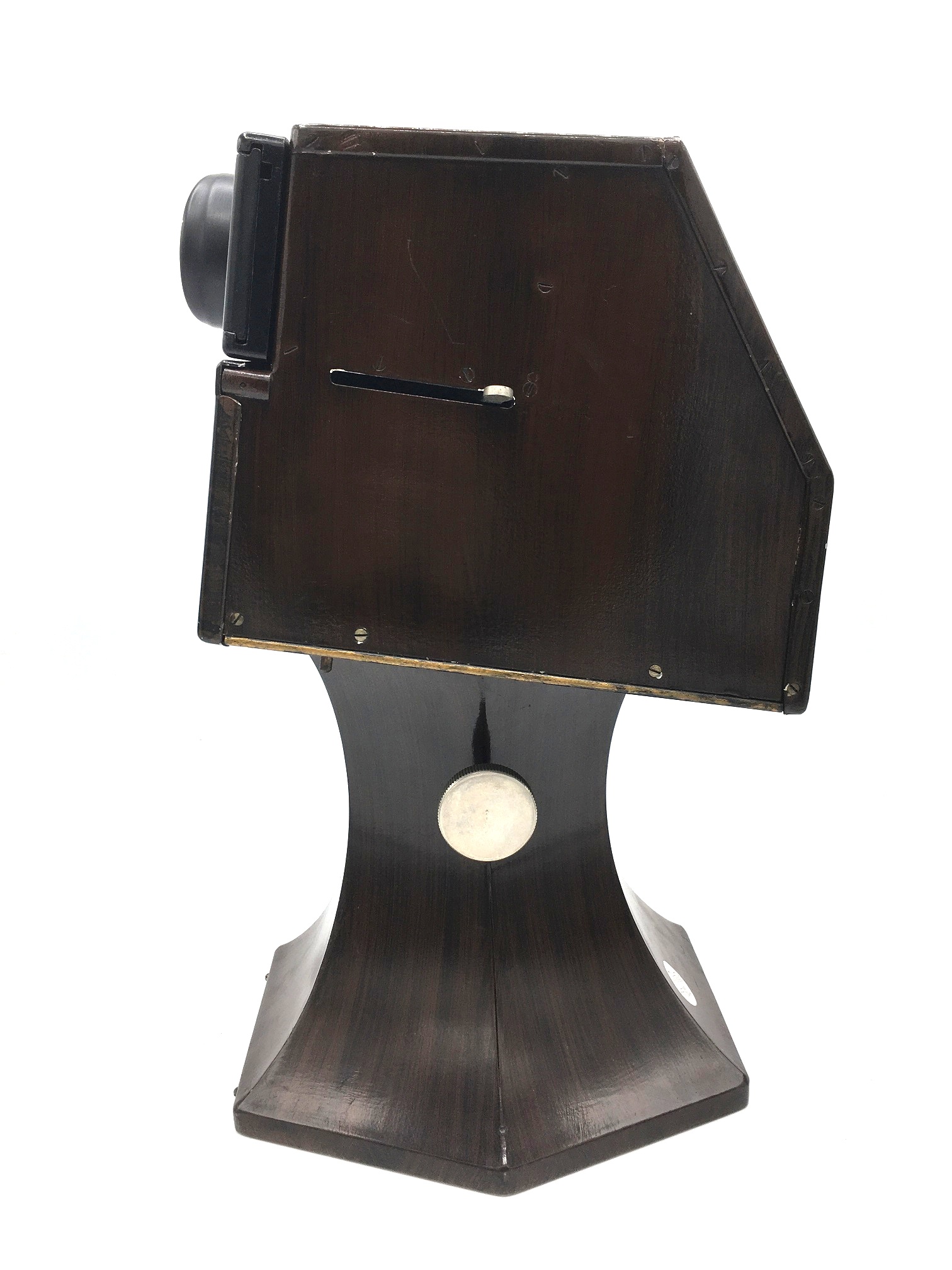
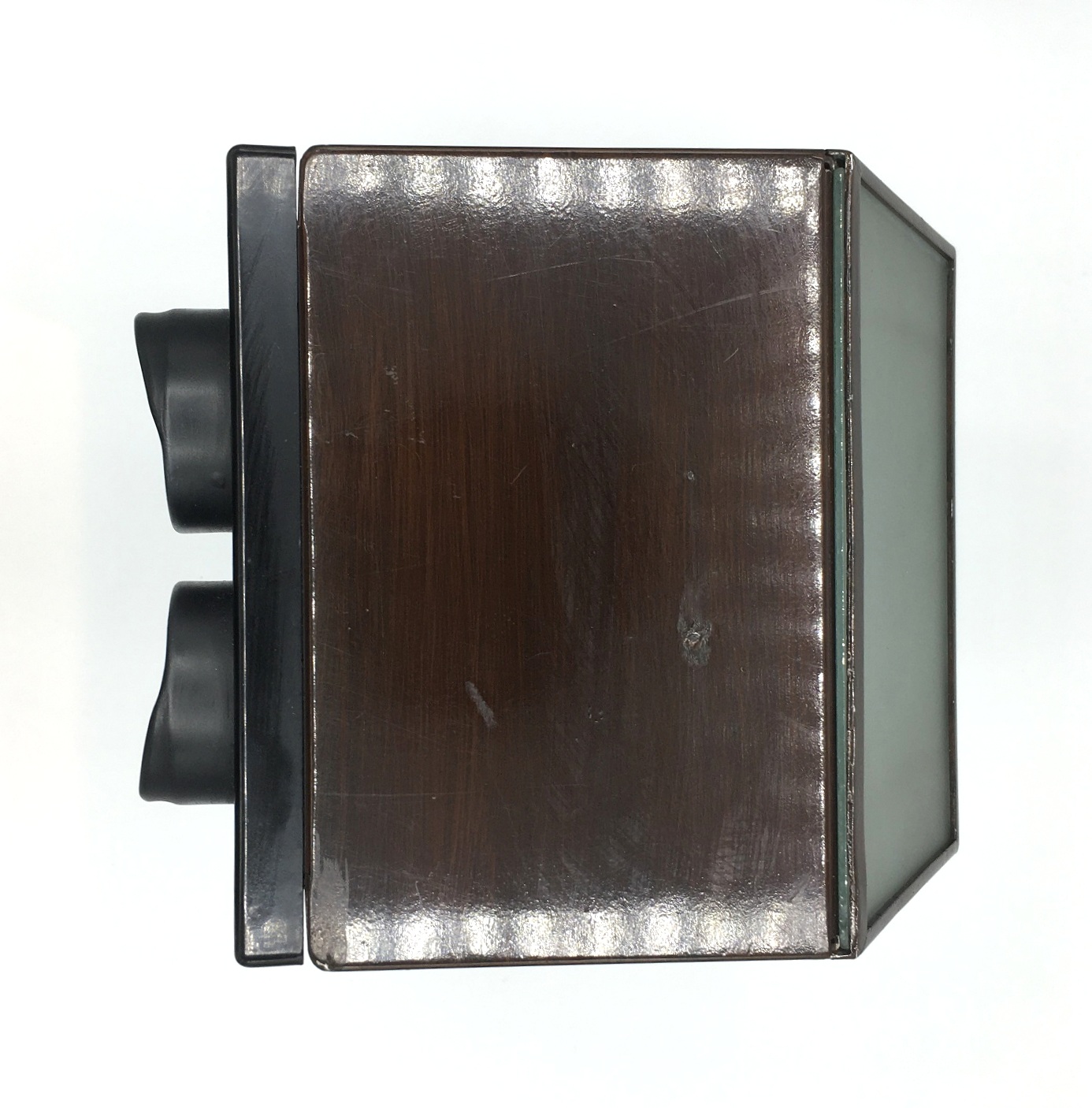
Gaumont Stéréodrome Métallique, 1920, France
At the beginning of the 20th century, the magic of cinema merged with the desire to recreate the perception of the world in three dimensions. This gave rise to the first stereoscopic devices, among them the Stéréodrome Métallique produced by the French company Gaumont around 1920.
This viewer, made of metal, allowed users to observe double photographic images taken with stereoscopic cameras: two slightly offset shots which, when seen through the lenses, blended into a single image with a three-dimensional effect.
Gaumont, already a pioneer of cinema thanks to Léon Gaumont and his innovative projection devices, developed this instrument as a tool for science, education, and home entertainment. The Stéréodrome enabled virtual travel: landscapes, cities, and monuments came to life before the viewer’s eyes with a depth that was astonishing for the time. Today, the Gaumont Stéréodrome Métallique stands as a valuable testament to the technological research and visual imagination of the early decades of the 20th century: a key piece in the long history of three-dimensionality, which, from the world of optical automata and magic lanterns, leads all the way to 3D cinema and contemporary virtual reality.